
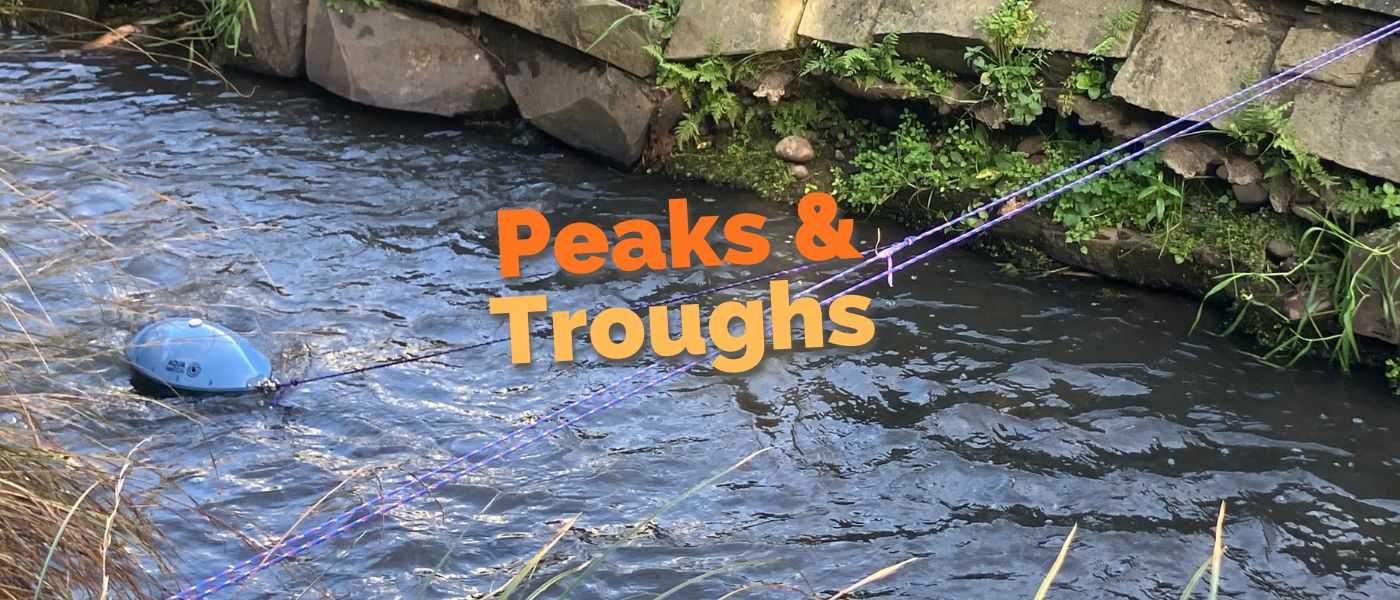
In our previous article, Daily River Rhythms, we explored a week’s worth of data from an Aquawatch WaQA continuous water-quality monitoring system installed by the Ōpāwaho Heathcote River Network in the Waimōkihi, just upstream of its confluence with the main stem of the Ōpāwaho Heathcote River. Recording key water-quality indicators every 15 minutes, the system revealed a distinct daily rhythm in the river, closely linked to sunlight, temperature and rainfall.
Since monitoring began in early July, the system has recorded more than 11,500 readings for each of the five indicators: water temperature, dissolved oxygen, pH, conductivity and turbidity. The data spans the transition from winter into spring, providing an early insight into how the river responds to changing seasonal conditions.
Water temperature The Waimōkihi is spring-fed, receiving much of its groundwater from springs at Ngā Puna Wai. Groundwater enters the river at a relatively constant temperature of around 12°C. But with the monitoring site some five kilometres downstream, there is plenty of opportunity for sunlight and air temperature to influence the water along the way.
Shading plays an important role in keeping urban waterways cool. Trees and overhanging vegetation help limit direct sunlight, particularly in shallow sections of the river. During summer, exposed stretches can warm considerably, while stormwater flowing over sun-heated roads and other hard surfaces can carry additional heat into the river during rainfall.
These temperature changes matter. Cold water holds more dissolved oxygen than warm water, while elevated temperatures and sunlight can encourage excessive algae and aquatic plant growth. Warmer conditions also increase the metabolic demands of fish and aquatic invertebrates, raising their need for oxygen and food at a time when oxygen may be less available.
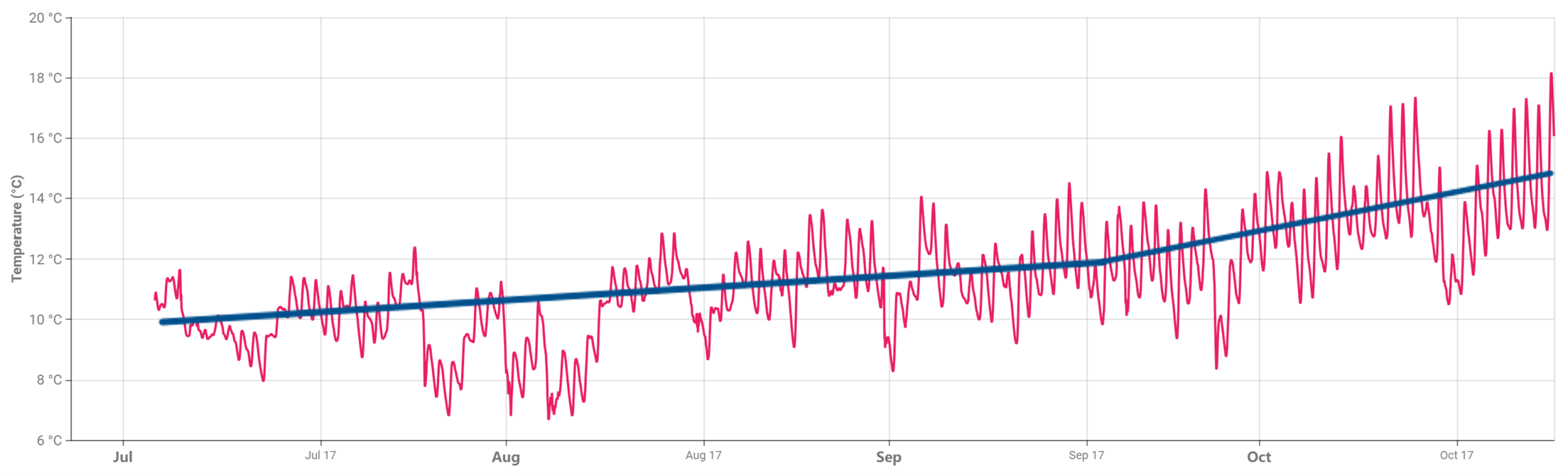
Temperature: July – October 2026: The blue line approximates the average daily temperature.
The monitoring data shows that water temperature in the Waimōkihi ranged from 6.67°C on 4 August to 18.09°C on 24 October. During winter, daily temperatures typically varied by around 2°C between the morning low and the afternoon high. By October, that daily range had increased to more than 4°C.
For a spring-fed, plains and urban waterway in Canterbury, a guideline value for water temperature is 20°C or below. The Waimōkihi has remained below that level during the monitoring period, but the approach of summer warrants attention. The frequency and duration of any future temperature spikes will be important indicators of potential stress on the river’s aquatic life.
With warmer weather ahead, the monitoring system will help us track whether these temperature changes become more pronounced.
Dissolved oxygen Dissolved oxygen is another critical measure of river health. Fish and aquatic invertebrates depend on it to survive, but oxygen levels naturally fluctuate throughout the day and night.
During daylight, aquatic plants and algae release oxygen through photosynthesis. After dark, photosynthesis stops, but respiration continues. Plants and algae consume oxygen and release carbon dioxide, which can also make the water more acidic.
Where plant and algal growth is excessive, this overnight oxygen demand can place additional stress on aquatic life. Decomposing organic material, including fallen leaves, grass clippings and street debris washed into urban waterways, adds to the problem. As bacteria and other microorganisms break down this material, they consume dissolved oxygen.
The amount of oxygen available can make a substantial difference to the health of a waterway. Levels above 9 mg/L are generally associated with low oxygen-related stress, while readings between 5 and 9 mg/L can indicate increasing pressure on aquatic organisms. Below 5 mg/L, the risk of serious stress and harm to many fish and invertebrates rises considerably.
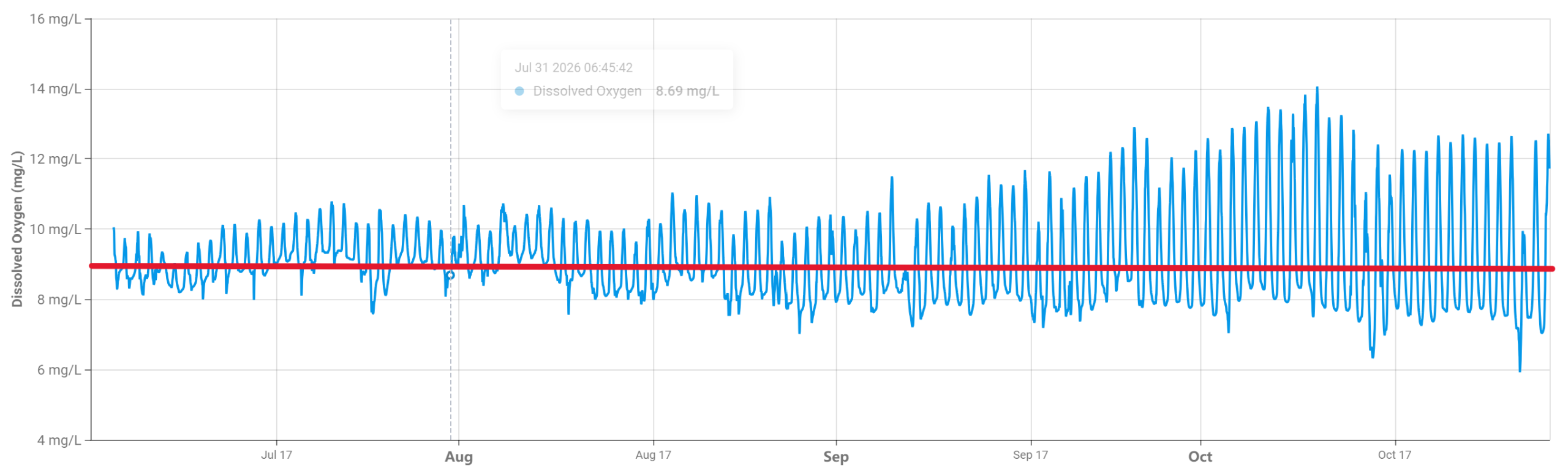
Dissolved Oxygen: July – October 2026: The red line indicates the 9 mg/L level
The Waimōkihi results provide an early warning worth watching. Just over half of the dissolved oxygen readings recorded during the three-month period were below 9 mg/L. The lowest reading was around 7 mg/L, briefly recorded during a rainfall event when stormwater entered the river.
The results suggest that dissolved oxygen could be an area of concern, although further monitoring will be needed to establish the causes and patterns behind these readings. Plant and algal respiration may be contributing, but the available data does not yet establish this as the principal cause.
As temperatures rise over summer, the relationship between water temperature, plant growth and dissolved oxygen will be particularly important. The continuous monitoring system will allow us to track these changes as they happen.
A clearer picture of river health Three months of data cannot tell us everything about the Waimōkihi, but it is already revealing patterns that conventional, periodic sampling may miss.
By recording conditions every 15 minutes, the Aquawatch WaQA system gives ŌHRN a much more detailed picture of how the river responds to rainfall, changing temperatures and daily biological activity.
As the trial continues, we will be watching closely to see what the data reveals through the warmer months — and what it can tell us about protecting the health of the Ōpāwaho Heathcote River and its tributaries from the more hazardous peaks and troughs of its water quality.