
Under Pressure: Climate Change and the Ōpāwaho Heathcote River Catchment
After the wetter and colder 2025/2026 summer in Christchurch, followed by the heavy rainfall in the middle of February 2026, what could be more timely than a discussion about the effects of Climate Change on the catchment?
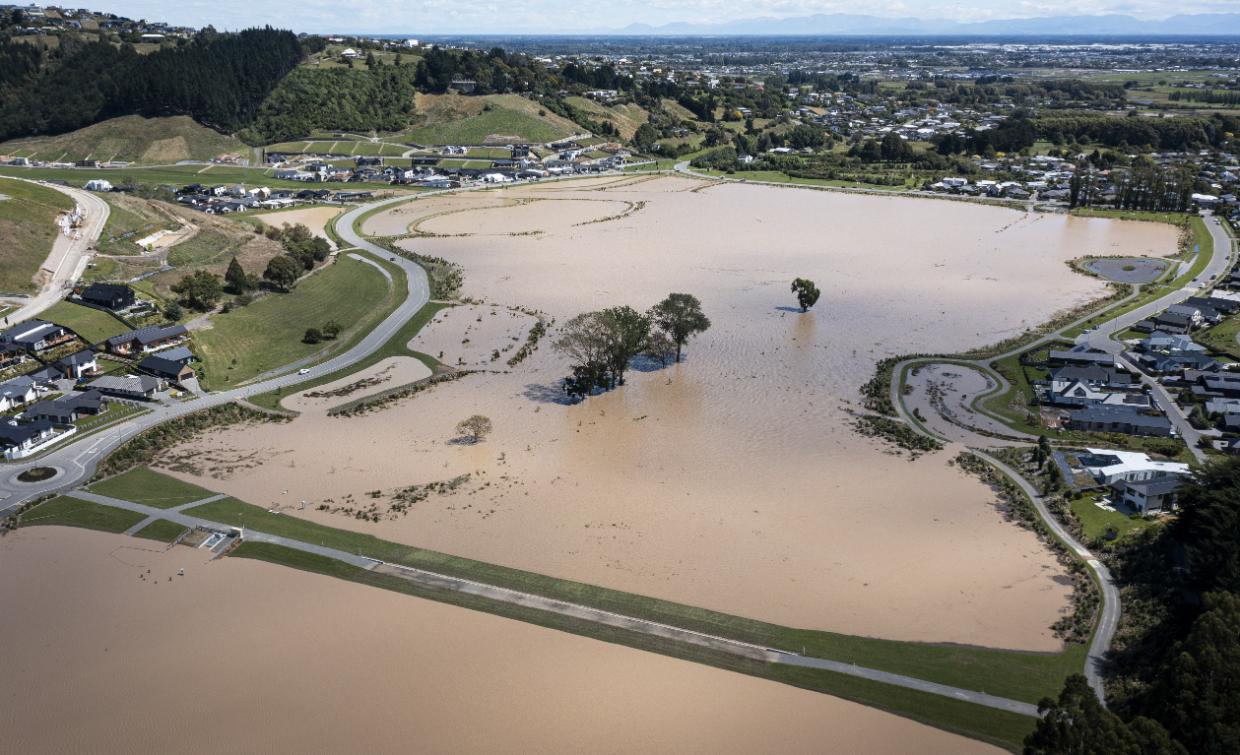
The Cashmere Valley detention wetlands and dam very close to full in February, 2026. Image: Alden Williams, The Press
The February rains took the normal river flow of 1.3m3/s (cubic metres per second) to a peak of 17.5m3/s within 24 hours, an event which, for the first time, filled the new detention dam in the Cashmere Valley to the point of overflow and filled all the detention ponds in the river headwaters to just below their capacity. Had the rain been a little more prolonged, Christchurch would have experienced a significant flooding event.
It takes events like this – events that are more extreme and happening with regularity all around the country – to accept that the climate is changing now. We can sense the change in the present weather from what we hoped for at the start of summer, but what will be the likely changes in 15, 35 or 65 years? The prediction of our climate has many unknowns, but it is possible to predict trends depending on how much the world’s communities can reduce emissions.

Click to read an onine version of the report
The Ōpāwaho Heathcote River Network has published a report that assesses the effects of climate change on the river and its catchment. Data published by the National Institute of Water and Air (NIWA, now a part of Earth Sciences New Zealand) has allowed our writers to forecast the potential annual and seasonal changes to wind, temperature, rainfall and a number of other climate variables. The report covers these physical changes, and also summarises government and local government policies.
The complete report is very thorough and is well worth a read. After all, we are all part of the catchment and will be affected by increases in very hot days, increased rainfall intensity and all the other climate changes that are explored. Predictions in the report all point to the need for preparation for the changes that are here now, and those that are coming.
Our report, Under Pressure: Climate Change and the Ōpāwaho Heathcote River Catchment should help inform conversations. If you would like to read the report, click here.
Here is a brief summary of the report findings…
What climate change means for our river and its catchment
- Our river is already under pressure from years of urban development, runoff from the Port Hills, and pollution. Climate change adds a new layer of pressure.
- Hotter days, fewer frosts, and changing rainfall More hot days (25°C +) and fewer frosts will bring longer summers and warmer spring and autumn periods. These shifts may place more heat stress on the river. At the same time, drier winters will dry out soils more, and heavier summer rain is likely to increase runoff and localised flooding.
- Heavier downpours and higher flood risk Summer storms are expected to become more intense, which may make flash flooding more likely, especially in areas already prone to flooding.
- Sea level rise and land subsidence Because land around Ferrymead is gradually subsiding, the effects of sea-level rise may become noticeable there sooner than other areas, with gradual impacts extending further upstream over time
- Impacts on ecosystems Warmer water, changing flows, erosion, and more frequent algal blooms will place taonga species like tuna, lamprey, īnanga and kōura under increasing stress.
- Increasing wildfire risk Hotter, drier conditions and stronger seasonal winds are expected to increase the likelihood and severity of wildfires on the Port Hills.
How we can adapt as a community
- Be part of planning the future of the catchment Christchurch City Council and Environment Canterbury will be developing adaptation plans for the catchment. Your voice matters when decisions about land use, flood management, and restoring the river are made.
- Make room for the river Advocate for new stormwater basins, restored wetlands, expanded riverside green spaces, and protection of higher-risk areas from further development.
- Join local restoration efforts Groups like the Ōpāwaho Heathcote River Network and neighbourhood volunteers are already planting, weeding, monitoring water quality, and caring for the river.
Practical steps for households
- Learn your property’s flood or stormwater risk Use CCC’s climate hazard viewer and the Climate Adaptation Toolkit to understand your property’s exposure and find practical ideas for your situation.
- Reduce runoff from your place Small changes help: install a rainwater tank, use permeable surfaces instead of concrete, and create rain gardens or dense planting along fences.
- Plant for the future Choose hardy natives that cope well with heat and dry spells. Trees help cool neighbourhoods, absorb stormwater, and support river health.
- Keep contaminants out of drains Everything on your section eventually reaches the Ōpāwaho: wash cars on grass, fix oil leaks, use less fertiliser and herbicide, and sweep hard surfaces instead of hosing.
- Prepare for hotter summers Use shade, ventilation, and trees on the north and west side of your home to keep indoor temperatures down — especially important for children, older people, and pets.