
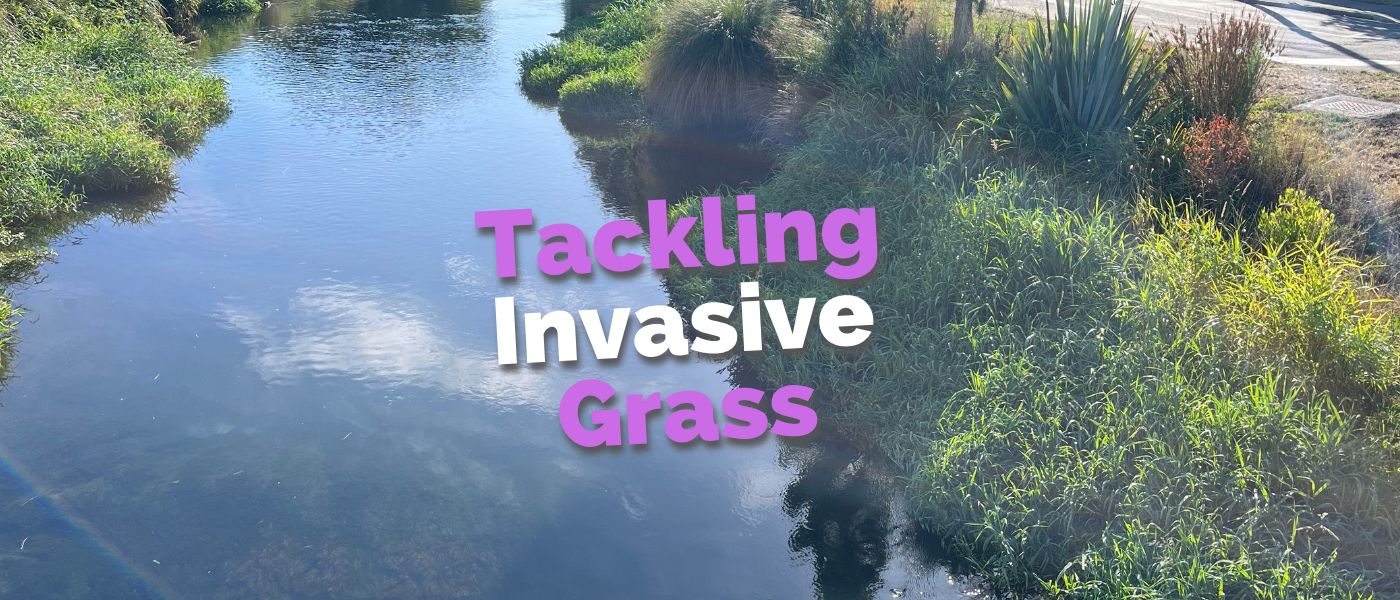
Something is changing along the banks of the Ōpāwaho Heathcote River upstream of the Beckford Road bridge – and it is part of a longer-term effort to restore the river’s native vegetation.
On the stretch of river between the Beckford Road bridge and the Ford Road/Fifield Terrace footbridge, some of the tall grasses growing along the banks and extending into the water are turning yellow-brown and dying. This is the result of a targeted weed-control programme being undertaken as a trial by the Ōpāwaho Heathcote River Network (ŌHRN).
With approval from Christchurch City Council and funding from the Waihoro Spreydon-Cashmere-Heathcote Community Board, ŌHRN has contracted a specialist team from CityCare Property to treat Reed Canary Grass (phalaris arundinacea), an invasive plant that has become established along the river. The aim is to determine whether targeted herbicide treatment can effectively limit its further spread upstream. This project was postponed from November, 2025.

Reed Canary Grass invading the riparian areas of the river near Beckford Road bridge
Target plant Originally introduced to New Zealand as a pasture and ornamental plant, Reed Canary Grass is now widespread throughout the country.
It is a tall grass with pointed leaves that often have a distinctive bluish-green appearance. It grows particularly well in damp environments, including wet grasslands, roadsides, waste areas and the margins of waterways like the Ōpāwaho Heathcote River.
How it spreads Although widespread nationally, Reed Canary Grass is a relatively recent arrival in the Ōpāwaho Heathcote River. It began establishing itself in the lower reaches of the river in the early 2000s and has gradually spread upstream.
Its spread has been inadvertently assisted by routine weed-clearance operations along the river. When mechanical weed harvesters cut back clumps extending into the water, or handheld weed-eaters are used to clear vegetation along the banks, seeds and fragments of stems and underground rhizomes can be released into the river. These can then be transported by the tides and establish new colonies elsewhere along the riverbank.
Reed Canary Grass is now present as far upstream as the Ford Road/Fifield Terrace footbridge. Further downstream, its distribution naturally diminishes as increasing saltwater intrusion creates conditions that are too saline for the plant to thrive along the river’s edge.
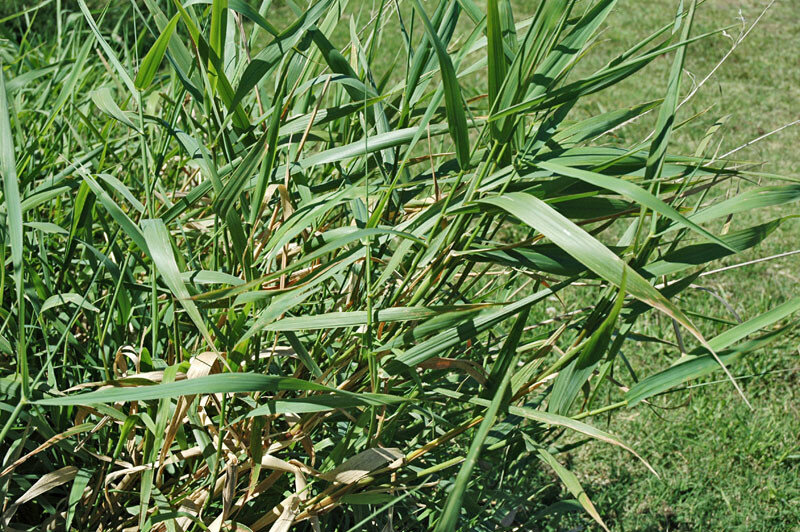
Canary Grass as it often looks along the river.
Why it is a problem? Once established, Reed Canary Grass can spread rapidly. It reproduces through underground stems, known as rhizomes, which can extend more than three metres in a year. These form dense, interconnected mats beneath the soil surface, making the plant difficult to eradicate.
Even when the visible growth is removed, dormant buds along the rhizomes can produce new shoots, allowing the plant to regenerate. Its rapid growth, early emergence and dense accumulation of dead vegetation can also suppress competing plants and restrict the establishment of native species.
In the river margins, native raupō appears to be one of the few plants capable of competing successfully with Reed Canary Grass. Left unchecked, the grass can progressively dominate areas that would otherwise support a more diverse range of native vegetation. You can see its effect particularly on the Richardson Terrace and Clarendon Terrace riverbanks where it is well-established.
What happens next? The spraying programme was originally scheduled for November last year but had to be postponed because of exceptionally poor weather. Contractors have now completed an initial treatment of the trial area between the Beckford Road bridge and the Ford Road/Fifield Terrace footbridge.
Once the effects of the treatment become apparent, a second application may be necessary to deal with areas where the initial treatment has been less effective. The trial will then be monitored, with its effectiveness assessed in November 2027.
The objective is to eliminate Reed Canary Grass from the trial area and prevent it from spreading further upstream. Where treatment leaves bare ground, ŌHRN intends to replant with appropriate native species once it is confident the grass has been successfully eradicated. Some areas may therefore remain bare for a period while the treatment takes effect and regrowth can be monitored..
If the trial proves successful, ŌHRN will consider whether the approach could be extended to other areas of the river further downstream. At this stage, removal of this pest plant from the entire river is not contemplated.
Whatever the outcome, preventing the further spread of Reed Canary Grass above Beckford Road bridge and improving the diversity of native vegetation along the Ōpāwaho Heathcote River there will remain our objectives.