
In 2025, we launched an ambitious initiative to control rats and mice along the Ōpāwaho riverbank, creating safer habitat where native birds can return and thrive. One year on, the results are providing valuable insights into what can be achieved through coordinated community trapping.
Why predator control matters Removing introduced predators, particularly rats and mice, can have a significant positive impact on biodiversity. Rats and mice are omnivores with a wide-ranging diet that includes birds, eggs, chicks, seeds, snails, lizards, fruit, larvae and flowers. This makes them both predators and competitors for food. Ship rats are also accomplished climbers and can prey on tree-dwelling native birds such as kererū, pīwakawaka and tūī.
The benefits of sustained predator control are demonstrated by the success of Predator Free Miramar, where native bird detections increased by 91%, including a 141% increase in tūī. Native bird populations also increased by 32% across Auckland’s eastern bay suburbs. The driving force was community action: around 4,500 residents hosting traps in their gardens, supported by hundreds of volunteers working in parks and reserves.
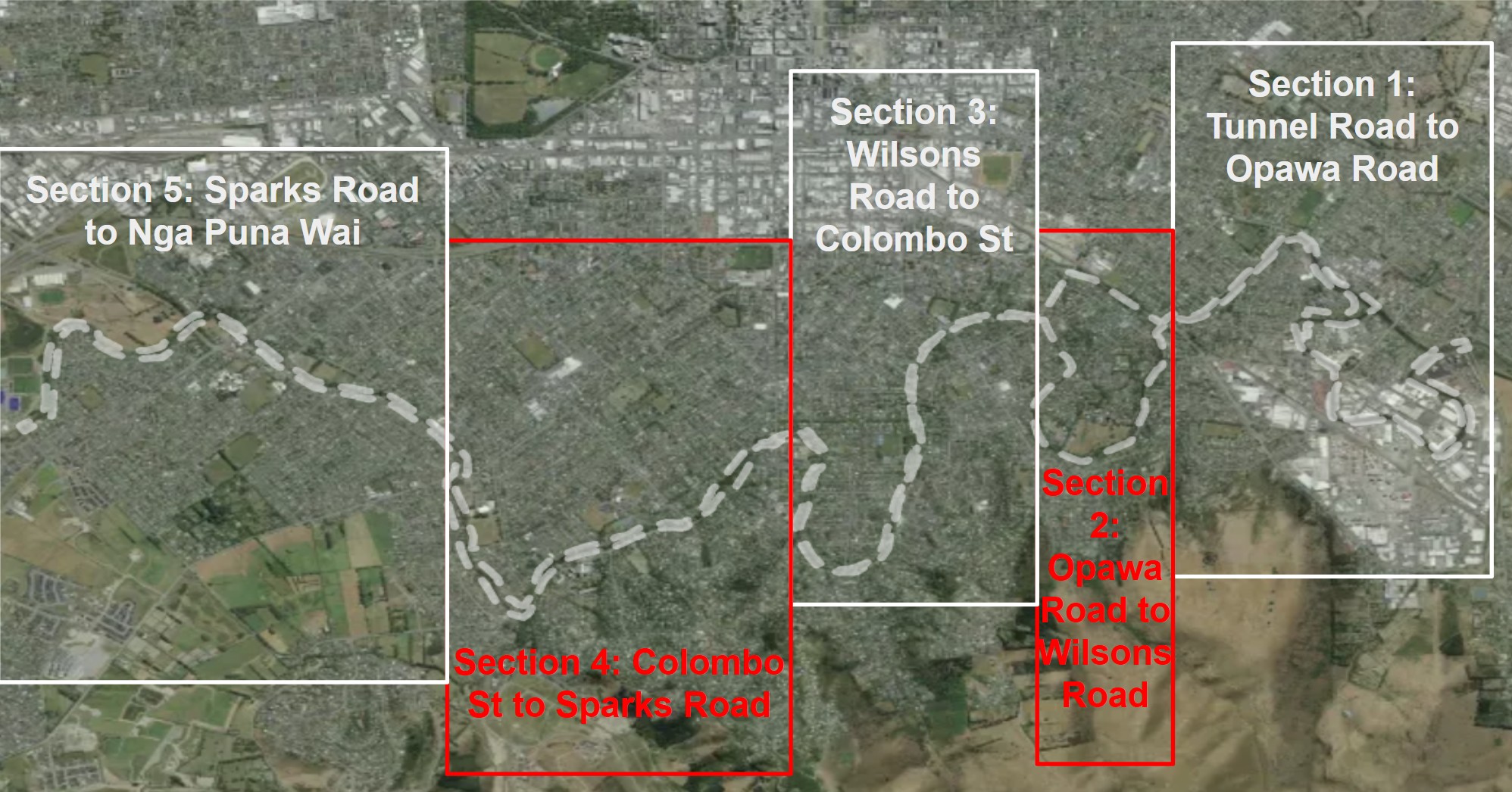
The five stages of the project. [Click to enlarge]
We trained 18 local residents to service the traps regularly. Some trappers manage just two or three traps, while others are responsible for as many as 14. Our primary targets were rats and mice, although we expected that some hedgehogs might also be caught. We did not, however, anticipate encountering mustelids.
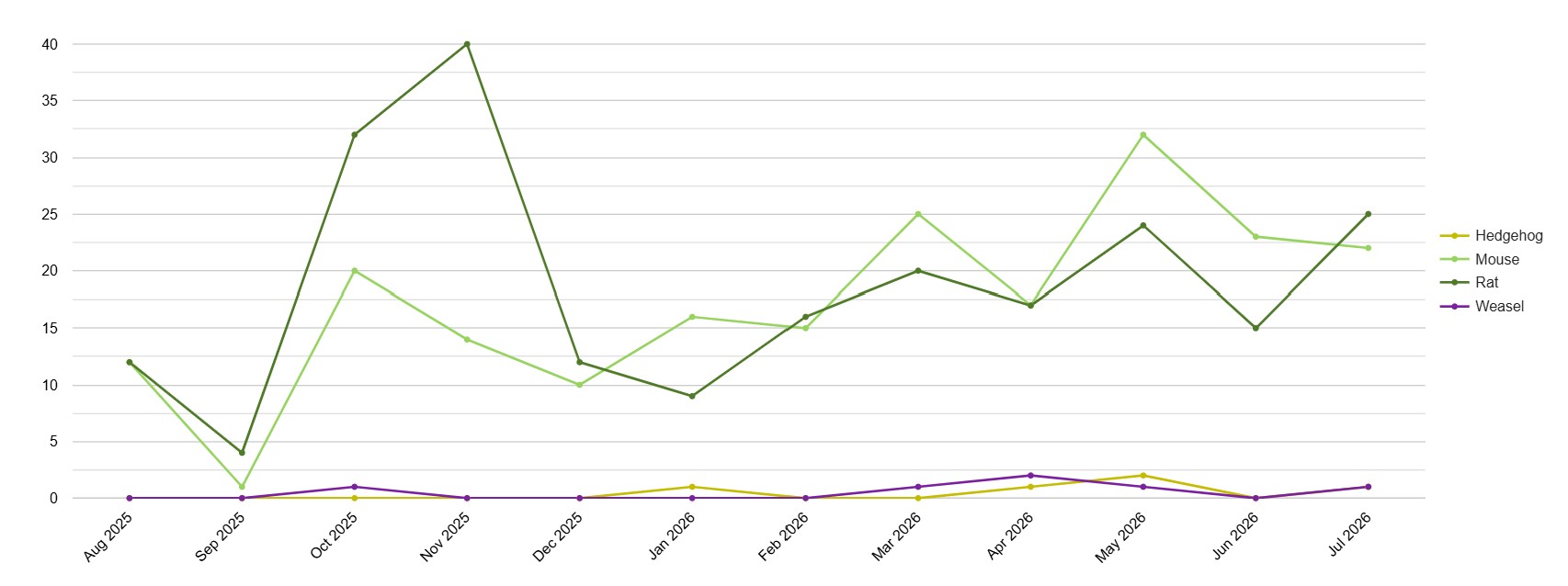
Catches by month (Click to enlarge)
The results after one year The first year of trapping has produced a significant catch. Across Stage 1, we removed a total of 444 predators removed from this section of the river corridor:
5 hedgehogs | 206 mice | 227 rats | 6 weasels
The six weasels were an unexpected discovery. We were initially surprised that the traps could catch them, but equally surprised to find that they were present in the environment. All six were caught at Kennaway Reserve, which borders industrial land at the downstream end of the trapping area. Weasels are particularly attracted to areas where mice and skinks are present, providing a likely explanation for their presence in this part of the river corridor.
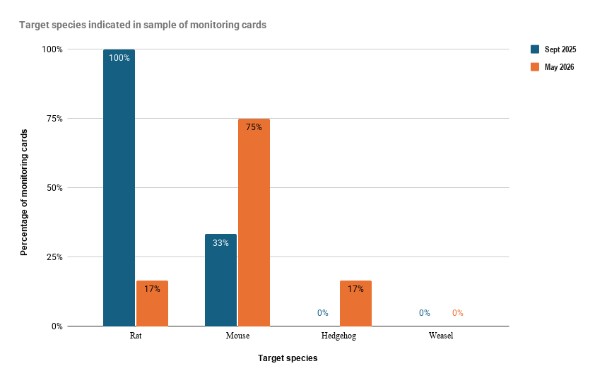
Monitoring snapshot of 12 sites after 9months [Click to enlarge]
The results for mice were less straightforward. Mouse presence increased from 33% to 75%. There are several possible explanations, including seasonal variation or mice moving into territory vacated by rats. We will continue monitoring to determine whether a consistent pattern emerges.
Stage 2: Ōpāwa Road to Wilsons Road Following the successful first year of Stage 1, we have extended the programme in 2026 to cover the section between Ōpāwa Road and Wilsons Road. This stage presents a different set of challenges. Longer stretches of riverbank have little shrub or long grass cover in which to locate trapping tunnels. We are addressing this in part through new plantings that will provide suitable habitat for both the traps and the wildlife we are seeking to protect.
Since 1 August, 97 trapping tunnels have been installed in this section and are being serviced by a new team of 15 trained local residents. The results so far have been impressive. In just three weeks, the traps have removed 43 rats and five mice from the river environment.
Understanding the rat population One unexpected finding is the relatively low number of Norway rats caught so far. We had anticipated more of this species because Norway rats are particularly associated with riverbanks. Instead, ship rats have dominated the catch. There are several possible explanations. Norway rats may be slower to investigate the traps, ship rats may be more inquisitive in this environment, or ship rats may be quicker to reinvade territory once it has been vacated. To better understand what is happening, we intend to deploy trail cameras and gather more evidence about predator movements along the river corridor.
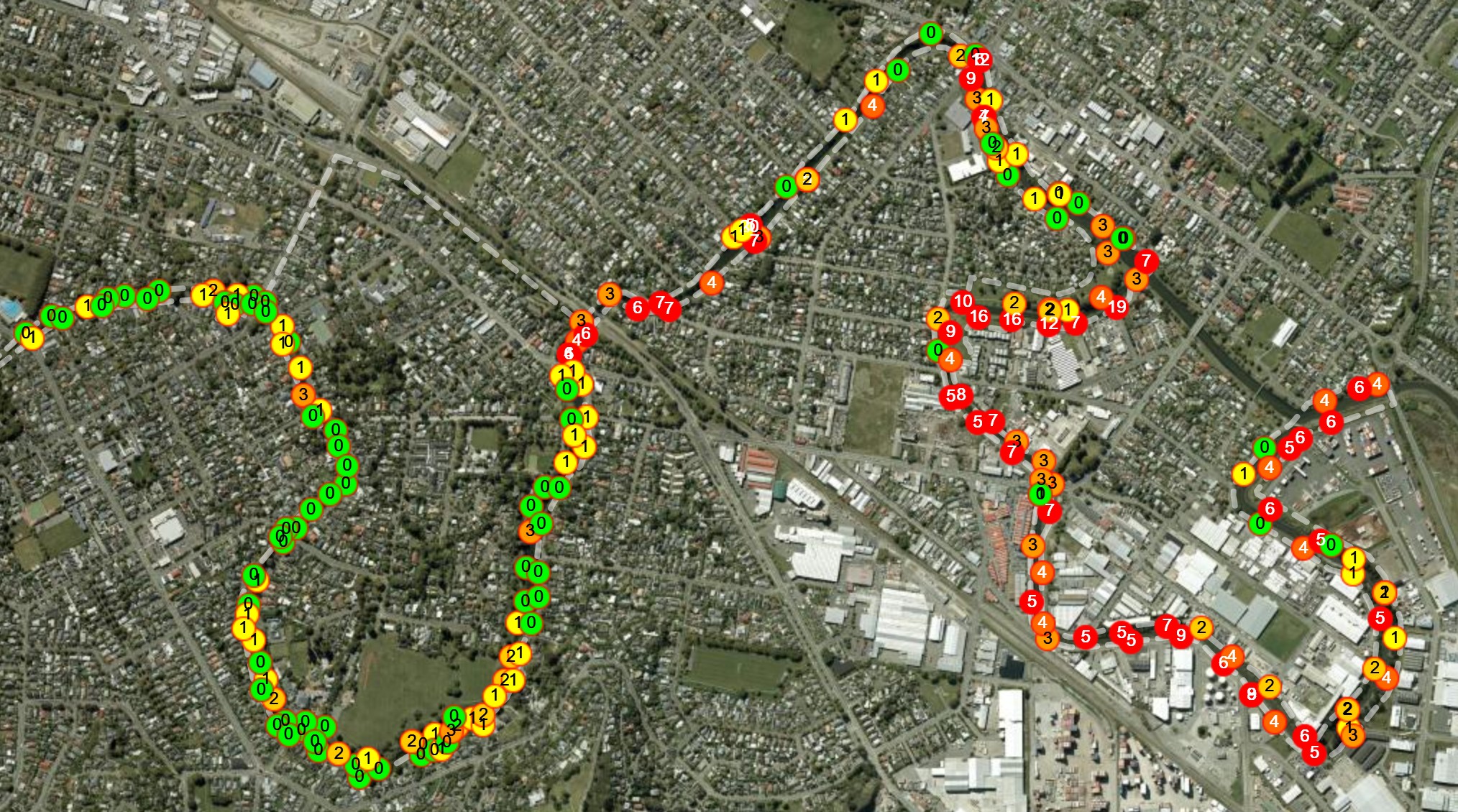
Catch by trap for Stages 1 & 2 to date [Click to enlarge]
It is not too late to be involved. While we probably have sufficient volunteers for the next stage to Colombo Street, we are looking for residents living near the river who are willing to help manage the traps and contribute to the final phases of Predator Free Ōpāwaho between Columbo Street and Nga Puna Wai.
At the same time, we are always on the hunt for residents who may want to participate in sections that we have already established, to take up spaces when current trappers wish to give up their traps.
Volunteering is straightforward. Trappers regularly check their allocated traps and record their results using a dedicated app already used by predator-control volunteers nationwide. No previous experience is required – training, equipment and ongoing support will all be provided.
If you would like to help bring back our native birds and improve the health of the Ōpāwaho, we would love to hear from you. Learn more and register as a volunteer by following this link.