
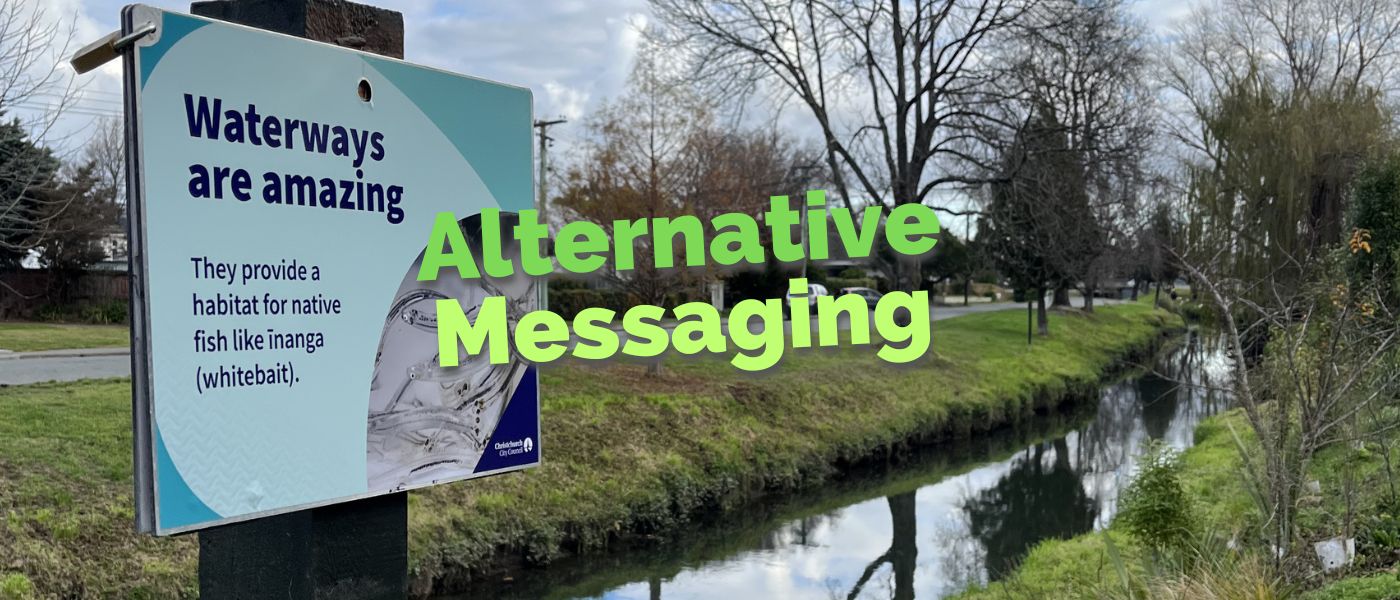
New signs along a section of the river provide alternative messages about the waterway for residents.
At regular points on the riverbank between Bowenvale Avenue and Ensors Road, the stretch of the river where wastewater overflows are most prevalent, wastewater pollution signs await the next sewage overflow into the river. Hinged in the middle and usually locked in a closed position, the signs will be opened at the appropriate time to reveal the pollution warning to residents.
Previously following pollution events, temporary plastic signs were erected along this stretch of the river. Inevitably, through wind or the unthinking action of passers-by, these temporary signs ended up in the river, creating a further pollution source. The hinged permanent signs are a trial reduction of plastic pollution but the bare grey reverse of the closed signs has been an unsightly visual pollutant. They have also been a magnet to graffiti artists and others of their ilk.
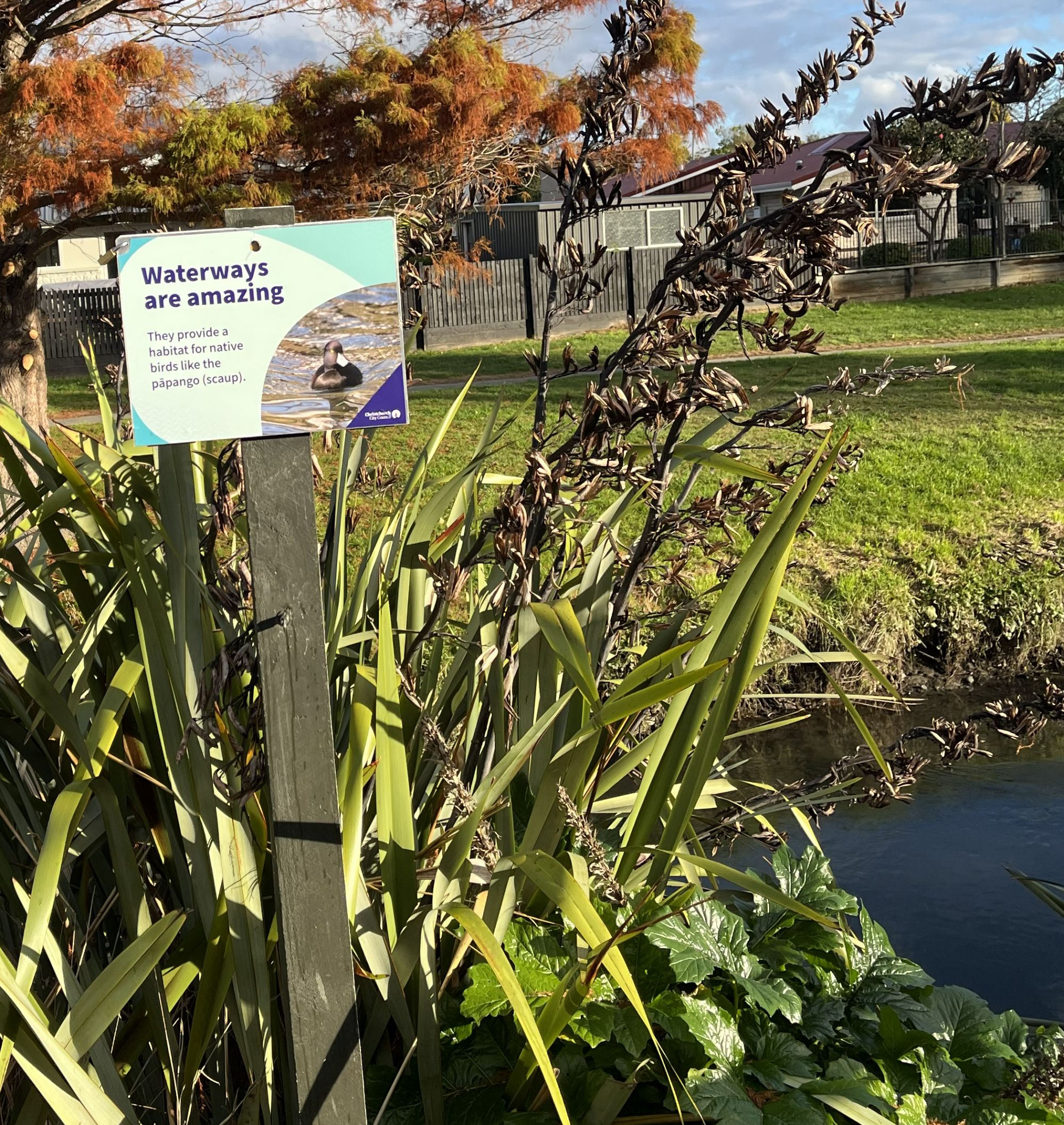 In a collaborative trial, CCC 3Waters and Parks, with encouragement and assistance from the Ōpāwaho Heathcote River Network, have used the closed pollution signs for some alternative messaging about waterways.
Residents walking along the riverbank in this area will almost certainly now notice a series of new, colourful signs covering the previously blank aluminium. There are a total of 14 different messages relating to protecting and caring for the local waterway, as well as the wildlife which make it a special environment.
A third of the new signs start with the affirmation, “Waterways are amazing”, and then go on to indicate one species of wildlife that can flourish along the waterway. These include:
- “They provide habitat for native birds like the pāpango (scaup).”
- “They provide a habitat for native fish like īnanga (whitebait).”
- “They provide a habitat for freshwater species like tuna (eels).”
- “They provide a natural habitat for native birds like the pūtangitangi (paradise shelduck).”
The other type of message starts with the plea “Help our waterways” and then states one of several ways in which action by a resident can help improve the waterway. These messages include: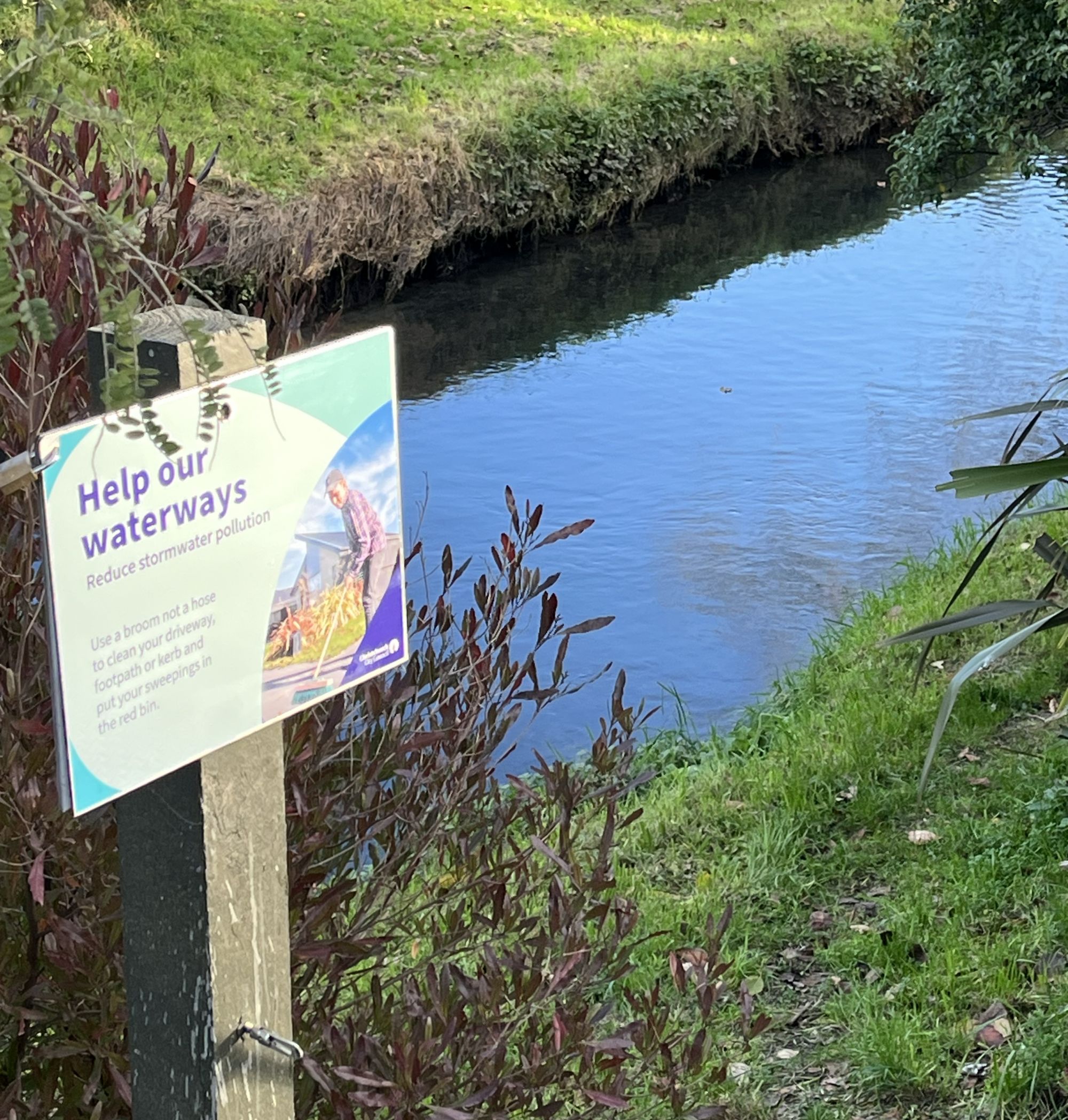
- “Reduce stormwater pollution. Use a broom, not a hose, to clean your driveway, footpath or kerb; put your sweepings in the red bin.”
- “Install a rainwater tank to collect stormwater from your roof. It reduces flood risk and riverbank erosion.”
- “Report problems. Use our Snap Send Solve app or call the pollution hotline on 0800 765 588.”
- “Please don’t feed the ducks, geese or swans. It can make them sick.”
- “Please don’t feed the ducks, geese or swans. It leads to overpopulation and loss of habitat for native species like the pāpango (scaup).”
- “Please don’t feed the ducks or tuna (eels). It is best for wildlife to forage for food. Uneaten food attracts rats which kill native birds.”
- “Please do not feed the ducks, geese or swans. Uneaten food attracts rats which kill native birds.”
- “Join other residents to look after a stretch of riverbank plantings. Visit ohrn.nz”
- “Pick up litter. Litter is a health risk to wildlife. Plastic breaks down to microplastics and enters the ecosystem of the awa.”
- “Pick up your dog’s poo and take it with you. Dog poop is a risk to the health of people, other dogs, wildlife and our waterways. If you don’t scoop the poop, you could be fined $300.”
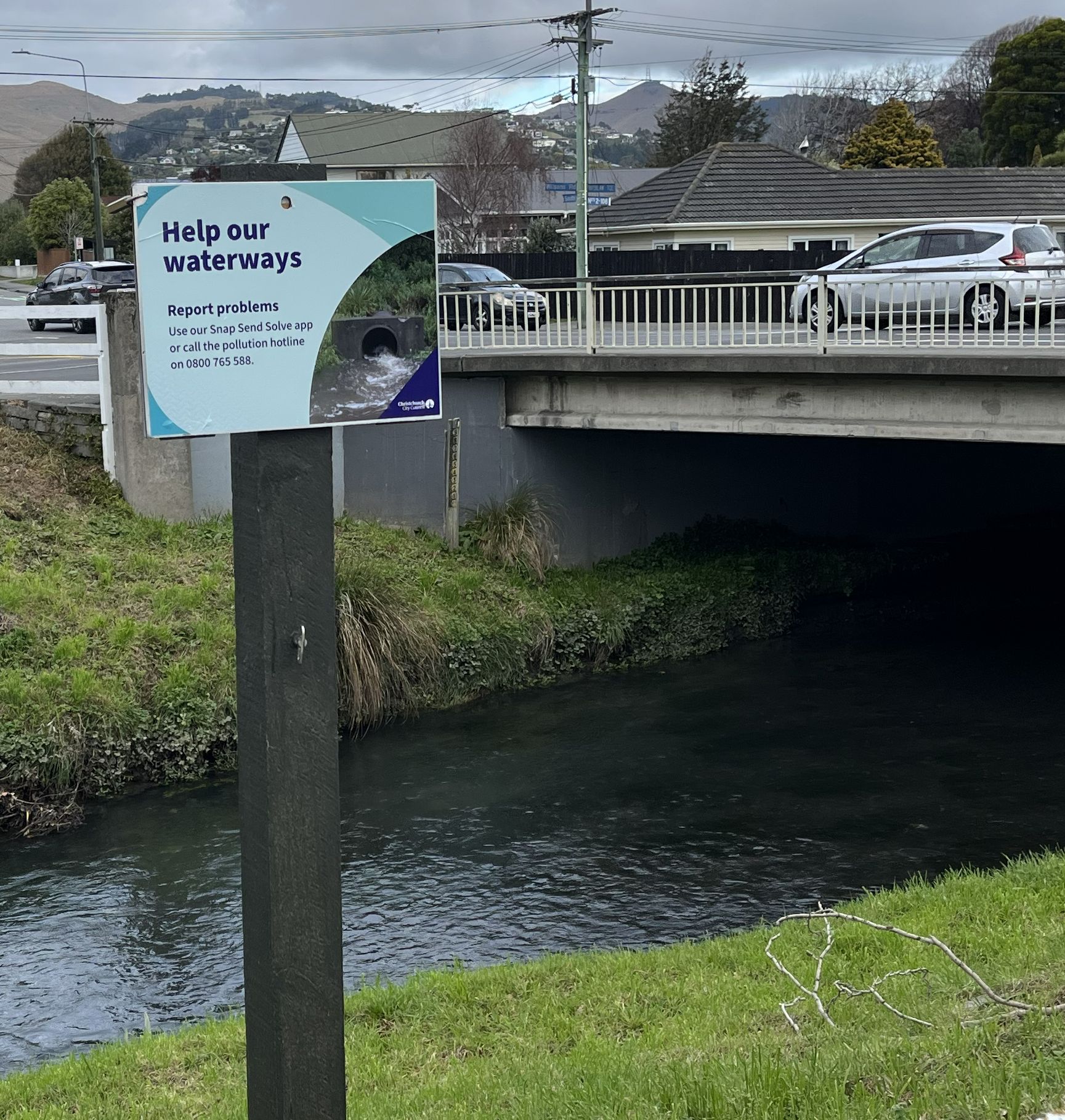 The signs have been installed beside waterways to provide an immediate connection between daily activities, the river and wildlife. The affirmation messages endeavour to draw attention to the unique qualities of the river – a habitat like no other; a taonga.
The other messages point to actions that may seem insignificant when undertaken by one resident, but the cumulative effect of which across thousands of households can be substantial.
Cleaner waterways support healthier fish populations, aquatic insects, native birds and riverside ecosystems, while also improving water quality for everyone who enjoys these natural spaces. The message is simple: everyone can play a part, and even small actions, repeated across the community, can lead to healthier rivers and a better environment for every living thing.