
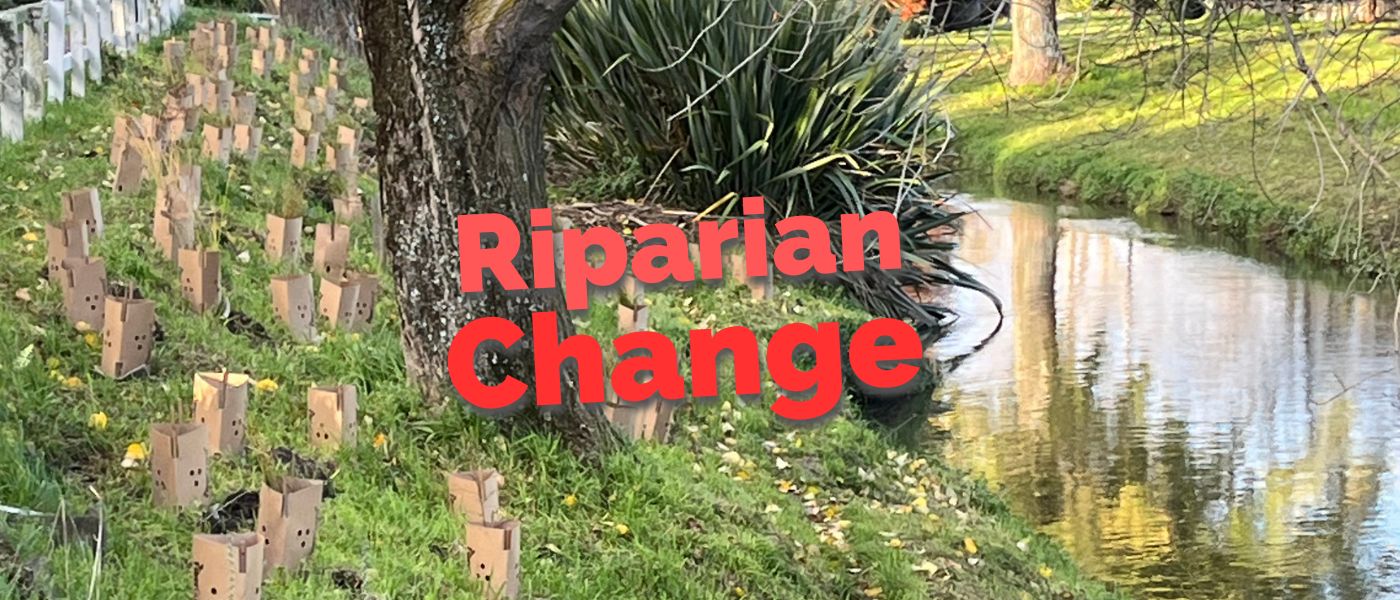
The Ōpāwaho Heathcote River is gradually being restored to greater health. Efforts are being made to improve water quality and to reform its urban-impacted margins – these interact to help revive the river system’s natural resilience.
The colonial settlers of Ōtautahi Christchurch built it on a series of wetlands that stretched between the Port Hills and the serpentine Ōtakaro Avon and Ōpāwaho Heathcote Rivers. In the 1850s, there were large areas of open water lying between raised land covered in harakeke, toitoi, raupō, tī kōuka and rushes. The recent construction of the Te Kuru retention ponds in Halswell is only a partial reinstatement of these wetlands – the new ponds, when filled, are much shallower than the original wetlands and are specifically designed for the temporary storage of stormwater rather than the creation of extensive wetlands.
Cashmere Stream did not exist in the 1850s, except as a current in the waters of the wetlands of what is now Lower Cashmere, Cracroft, Hoon Hay and Halswell. The riverbanks of the Ōpāwaho Heathcote River would only have been distinctive in places where the land on each side rose above the standing water level. Draining these wetlands in the latter half of the 19th century made possible the southern Christchurch suburbs of Halswell, Lower Cashmere, Beckenham, Hoon Hay, Aidanfield, Hillmorton, Somerfield and Sydenham.
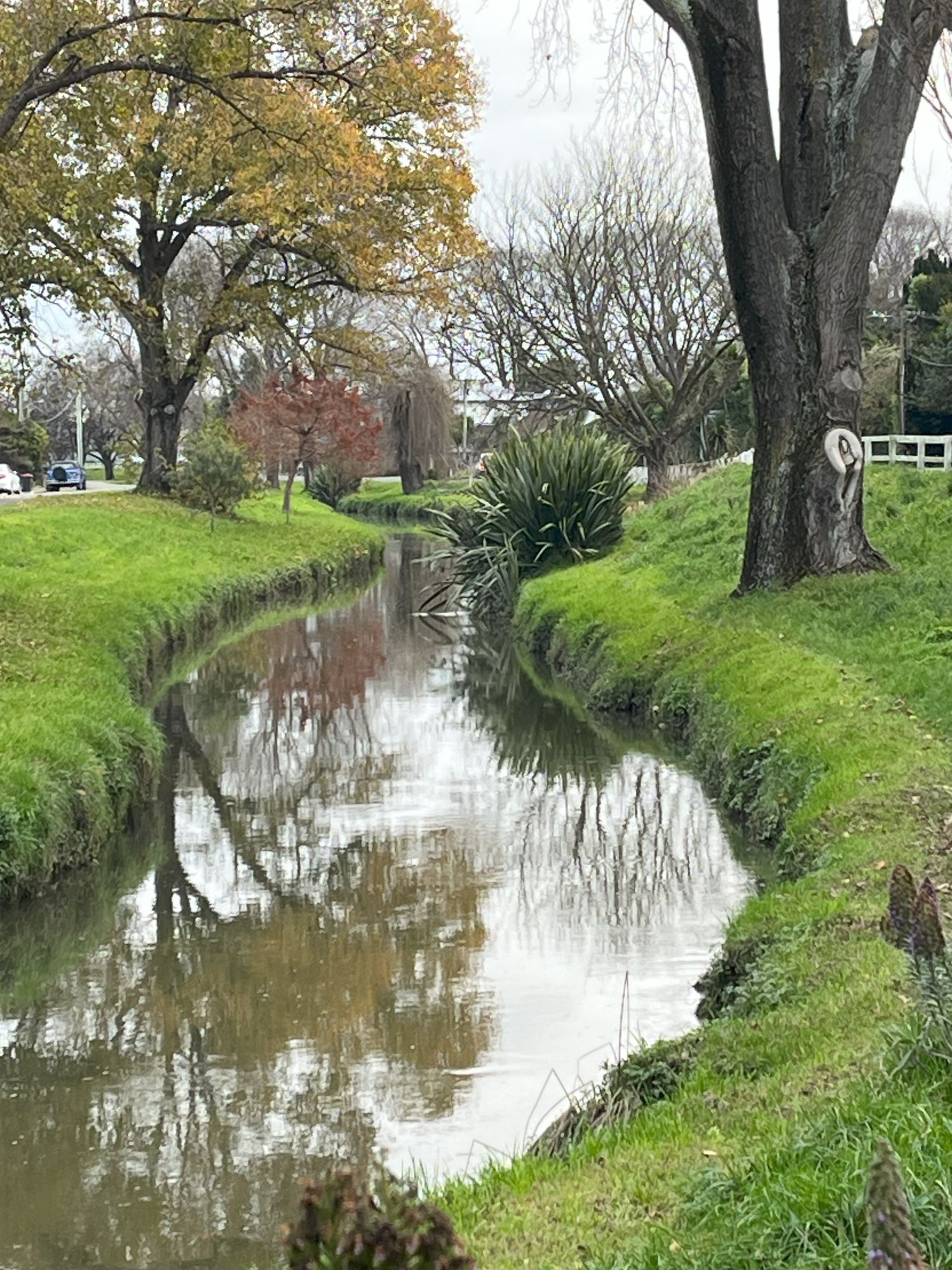
River at St Martins: a mono-culture of exotic grasses may look neat and tidy but it is not the correct riverbank eco-system for river health in New Zealand.
What history has handed down It is understandable, but regrettable, that the early planners permitted roads and residences to be placed on these riverbanks, along with underground services – water, sewerage and, more recently, electricity and communications. Imagine, for a moment, what the form of the city might have become if, right from the beginning, there had been recognition that the rivers should be important reserve areas – a 50m reserve could have been formed on both sides along the length of each river. We would have amazing public recreational amenities throughout the city, with large areas set aside for passive recreation. These reserves would have increased the amenity values of the entire city from the plains to the sea while also giving the river sufficient space to spread out during rain events without affecting homes.
We must, however, work with the reality of what history has left us – inadequately narrow riparian margins, many of them given over to the dominance of exotic grasses, with roads and services crowding close to the edge of the riverbank. Left alone, these riverbanks become overgrown with exotic weeds and are difficult to manage. The current management regime is to use gangs of people with weed eaters to mow them three times each year. We can do so much better than that, and we should for a number of excellent reasons which will include increasing carbon capture.
Sediment control The dominance of the car in city planning is fortunately waning. Parking of vehicles on the roadside edge of the riverbank is something we can easily curtail – it is totally unnecessary. Using bollards, kerbing and planting to prevent riverside parking is entirely justifiable from both ecological and aesthetic viewpoints. Removing riverside parking will reduce the contribution that the mud generated by this parking adds to the sediment loading of the river during and after rain events. Although this contribution is dwarfed by erosion from the Port Hills, there is still no justification for it. Reducing car movement altogether also benefits the river – the fewer car movements, the less rubber worn off on roads and therefore the less contamination of stormwater from the zinc oxide hardening agents in the rubber dust.
Water quality improvements Since most stormwater eventually ends up in the river, treating the runoff from roads is vital to remove heavy metals and other contaminants toxic to life in the river. The health of the river is greatly affected by this pollution source and mana whenua have been demanding improved treatment of stormwater for a long time now as part of their insistence that the quality of water everywhere is respected. Wider river margins and the removal or restriction of riverside roads would help with this.
We can also significantly improve the health of the river by shading it as much as possible through tree planting, particularly along its northern banks. By shading the river, in-stream weed and algae growth is suppressed. Cooler water temperatures also increase the oxygen levels, thereby improving the environment for macrobiotic life. Fish also prefer shaded water for the refuge it affords.
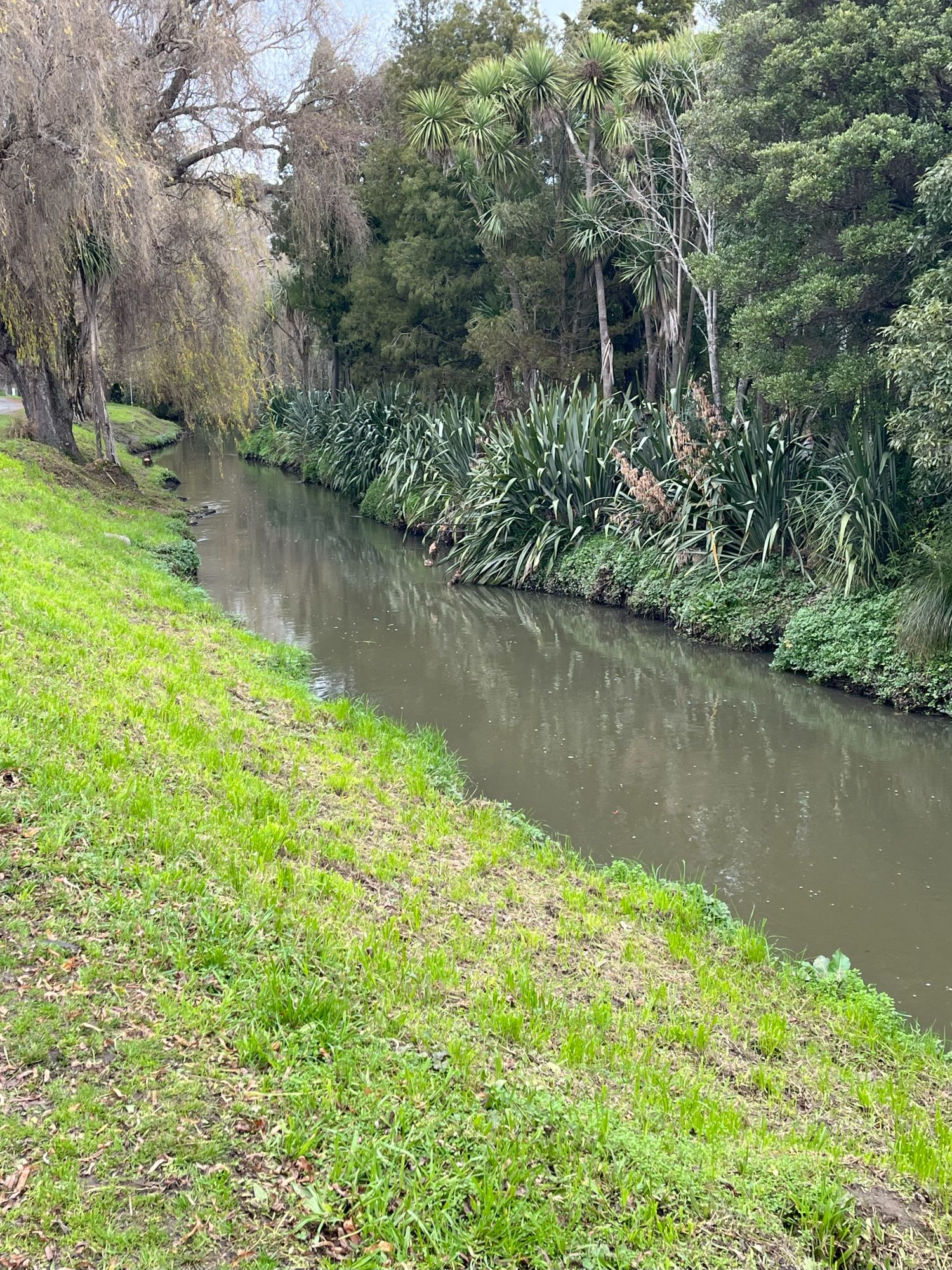
Contrast at Te Ringatini (the Donkey Track) – exotic monoculture on the left with developing carbon-capturing indigenous eco-system on the right.
Habitat and ecosystem restoration The margins of a river should be the habitat for thousands of species of plants, fish, insects and fungi all living in a complicated and interwoven system of food and protection relationships that we call an ecosystem. That means a range of plant types and forms, leaf litter and spaces within and between them. Short grass is not a suitable habitat for the range of organisms required for ecosystem health. We need to largely replace the grass on the riverbanks with areas of bush, native grasses and rushes. When such areas are mature, the river will still be visible and accessible in many places, but it will also certainly look different to what the residents of Christchurch have come to expect. It will no longer be ‘neat and tidy’, but it will be a source of food and habitat for native birds, insects and other ecosystem inhabitants. Removing rats, mice and hedgehogs from this environment will also help the restoration of the whole ecosystem since these predators prey on all native animals that should live in abundance in these areas.
Progress is being made Like turning a ship, turning the environment away from a destructive and exploited existence to one of restoration takes time and effort, and acceptance of change. But things are happening to help the river.
Meeting the requirements of its Comprehensive Stormwater Network Discharge Resource Consent has forced the City Council to channel considerable funds into improving wastewater systems, investigating the sources of contamination and reducing them, and looking for system change that can bring further improvements – like the filter systems in Bells Creek.
The Ōpāwaho Heathcote River Planting Plan, a recent spin-off from the city’s Urban Forest Plan, is seeking to regularise and accelerate the planting of riparian areas with native species, reducing the areas of exotic grasses to be cut. Already, there are many groups of residents caring for riverbank and reserves on the awa. Planting of the Port Hill valleys to reduce erosion is underway and much more is in the planning stage. A project by the Ōpāwaho Heathcote River Network to trap rats, mice and hedgehogs along the river is about to commence. Many of these steps require community support and manpower to succeed.
While the journey continues, attitudes are shifting, and tangible progress is visible. Our river is on a path toward a healthier, more natural future – one that benefits ecosystems, communities, and future generations.